
 Call us now:


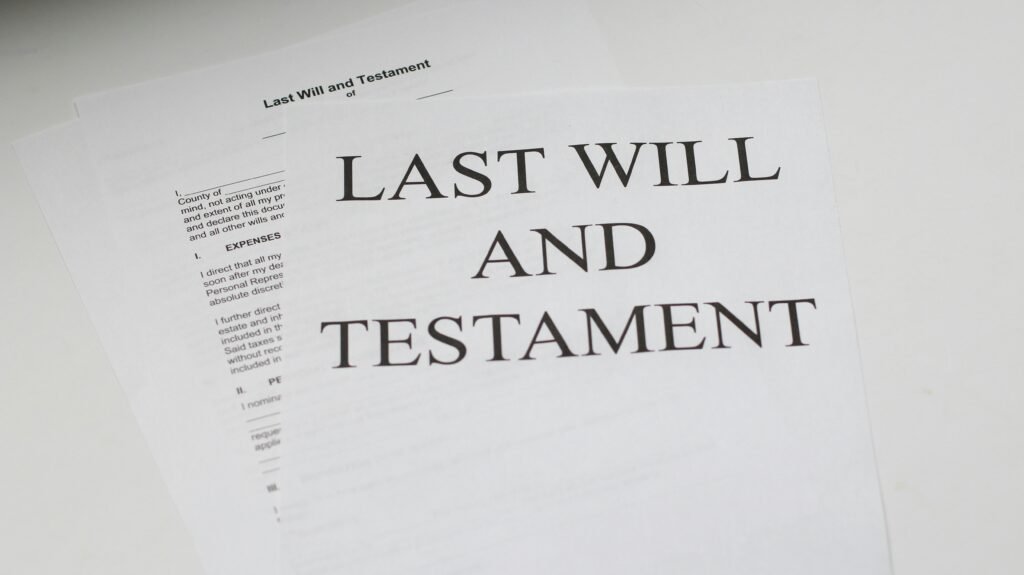
Table of Contents
A Widow Who Remarries Can Lose Her Inheritance in Zambia, Here’s Why That Matters for Every Estate
Following the death of a loved one, the formal administration of their estate involves strict procedural and documentation requirements, and few provisions in probate law Zambia families rely on catch people as off guard as this one: under the Intestate Succession Act, a surviving spouse who remarries can forfeit their share of the estate entirely. Whether that provision applies to a given family’s situation is exactly the kind of detail that shapes how, and how carefully, an estate needs to be administered.
Testate or Intestate: Two Very Different Legal Paths
Zambian law treats estates differently depending on whether the deceased left a valid will. If they did, the estate is testate, and administration proceeds under the Wills and Administration of Testate Estates Act (Chapter 60). The named executor must apply to the High Court for a grant of probate, a formal order authorising them to manage the deceased’s affairs according to the will’s instructions. Probate, once granted, establishes the will and evidences the executor’s title from the date of the testator’s death, and has effect over all the deceased’s property throughout Zambia.
If the deceased left no will, or left a will that only disposes of part of their estate, they are considered to have died intestate in respect of the undisposed portion, and administration proceeds instead under the Intestate Succession Act (Chapter 59). In this case, family members must apply to the High Court for letters of administration rather than probate, appointing an administrator to manage and distribute the estate according to the Act’s statutory formula rather than the deceased’s own instructions, since none exist.
How Intestate Estates Are Actually Divided
Where an estate is intestate, the Act sets out a fixed distribution formula: 20% to the surviving spouse (or divided proportionally among multiple surviving spouses based on the length of each marriage), 50% to the children, distributed according to age and educational needs, 20% to the deceased’s parents, and 10% to other dependants. Where there’s no surviving spouse and the estate includes more than one house, the children are entitled to choose one house to hold as beneficial co-owners, with any remaining houses forming part of the wider estate for distribution, a provision the High Court applied directly in Chibwe v Chibwe (2014).
The remarriage provision worth knowing: under Section 9(1)(b) of the Act, a surviving spouse who remarries forfeits their share of the estate. This is a real, enforceable provision, not a theoretical rule, and it has shaped the outcome of actual litigation over family property.
It’s also worth knowing that the Intestate Succession Act applies specifically to people who, at death, belonged to a community to which customary law would otherwise have applied, a point the High Court addressed directly in Walker v Walker (2011), where the Act was found not to apply to a British national’s estate at all. Land held under customary law, and chieftainship property, sit outside the Act entirely and follow different rules.
Where We See Families Get Tripped Up
The mistake we see most often isn’t about the law itself, it’s about documentation. Executors and administrators are required to account fully for how an estate has been administered before the High Court will revoke a grant of probate or letters of administration. That means keeping proof of every step: auction receipts, delivery notes when property passes to a beneficiary, bank transfers, and any other evidence showing the estate has genuinely been settled. Families who treat estate administration informally, distributing assets based on verbal agreement without documenting the process, often find themselves unable to formally close the estate later, even once everyone has, in practice, received what they were owed.
Our advice: document every distribution as it happens, not retrospectively. The Court needs to be satisfied there is genuinely nothing left to administer before a grant can be revoked, and that’s far easier to demonstrate with a paper trail than with memory.
A Realistic Scenario
Consider a family where the father dies without a will, owning two residential properties and some savings. Under the Intestate Succession Act, his estate should be distributed 20% to his surviving spouse, 50% among his children, and the remaining shares to his parents and dependants, with his children entitled to select one of the two houses to hold jointly. Without formal letters of administration, the family attempts to divide the properties informally between themselves. Years later, when one sibling wants to sell their portion, they discover the property is still registered solely in their late father’s name, no legal transfer ever took place, because no administrator was ever formally appointed to authorise it. What could have been resolved in months through a proper High Court application becomes a prolonged legal process to establish rightful ownership after the fact.
What This Means for You
If you’re an executor named in a will, applying for a grant of probate promptly gives you the formal legal authority to act, rather than relying on informal family consensus that carries no legal weight.
If a family member has died without a will, letters of administration are the only route to formally distribute the estate according to the Act’s statutory shares, and skipping this step creates problems that often surface years later, exactly when they’re hardest to resolve.
If you’re a surviving spouse considering remarriage, understand how Section 9(1)(b) may affect your entitlement to your late spouse’s estate before making that decision, not after.
At Mesdames Jane Jere Legal Practitioners, we assist executors and administrators with applications for grant of probate or letters of administration before the High Court, and provide full estate administration services through to final distribution.
For related reading, see our guides on Estate Planning and Family Law in Zambia, or explore our Probate and Administration of Estates category for further updates.
This article was prepared by Mesdames Jane Jere Legal Practitioners and reviewed for accuracy against the Wills and Administration of Testate Estates Act (Chapter 60) and the Intestate Succession Act (Chapter 59).
