 Call us now:



Table of Contents
You are at home, at work or at your business when someone hands you a set of documents and tells you that you have been served with court papers. In that moment, most people have the same questions: what does this mean, am I being sued, do I have to go to court, how long do I have to respond, can I ignore this, and do I need a lawyer?
Being served with court papers does not mean the allegations against you are true, and it does not mean the other side has already won. It means that a legal proceeding has been started, or that an application has been made, which now requires your attention. What it should never mean is that you put the documents in a drawer and hope the problem goes away. This guide walks through what to check first, how to respond, and what happens if you do nothing.
Start by identifying exactly what you have been served with
“Court papers” is a broad description that covers several different documents, and the type of document matters because different proceedings carry different procedures and different response requirements. Depending on the case, you may have been served with a writ of summons, an originating summons, a petition, a notice of motion, an application, a judgment summons, a notice, or an order the court has already made. Read the document carefully and ask: what exactly does it say I am required to do, and by when?
Identify the court, the registry and the case number
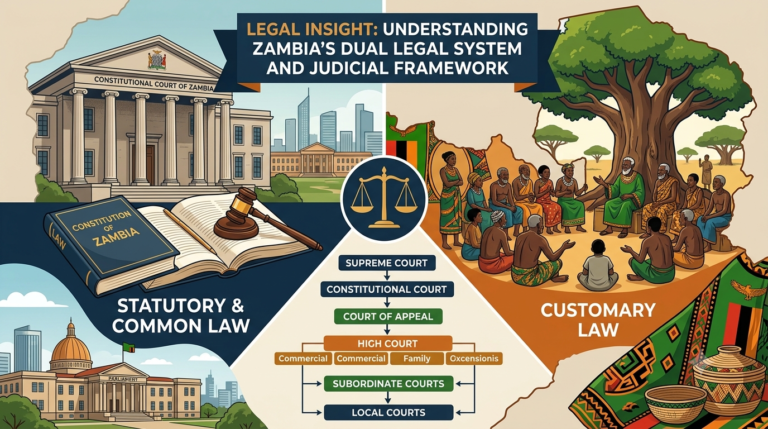
Before anything else, note down the name of the court, the registry, the case number, the names of the parties, the date on the document, the nature of the proceedings, and any hearing date or deadline stated on it. Zambia’s court system includes the High Court, subordinate courts, and local courts, along with specialist divisions such as the Commercial Court and the Family and Children’s Court. Procedure can differ depending on which court and which division the matter is in, so do not assume that every case follows an identical process.
Understand who has brought the case, and against what
Identify the claimant, plaintiff, applicant or petitioner, and check how you are described — as defendant, respondent, or another party. The terminology varies depending on the type of proceedings. Then look at what is actually being claimed or requested: payment of money, damages, possession of property, an injunction, enforcement of a contract, a declaration of rights, an employment-related order, recovery of a debt, or some other remedy. An allegation set out in a claim is not the same as a proven fact — the purpose of the court process is to allow the dispute to be determined according to the evidence and the applicable law, which is exactly why your response matters.
Find out how long you have to respond — do not assume
This is one of the most important things to get right, and there is no single, universal answer that applies to every document. Zambian civil procedure is governed by the High Court Act and the High Court Rules made under it (most recently amended by the High Court (Amendment) Rules, 2020), while proceedings in the lower courts are governed by the Subordinate Courts Act and its own procedural rules. The time you have to enter an appearance, file a defence, or respond to an application depends on the specific type of proceedings, the court, the document itself, and how and when you were served.
Do not rely on what a friend, relative or the other party tells you the deadline is. Read the document, and if the deadline is not clear, get legal advice immediately rather than guessing.
Get legal advice as soon as possible
A lawyer needs time to review the documents, take proper instructions from you, investigate the background, identify the applicable law, carry out any necessary searches, and prepare and file a response before deadlines close in. The earlier you bring a lawyer in, the more options they generally have to protect your position — waiting until a few days before a deadline narrows what can realistically be done.
Give your lawyer everything, not just the first page
Keep every page of what you were served with, including annexures, supporting affidavits, exhibits, notices and any correspondence attached to the documents. Do not discard anything because it looks unimportant — a seemingly minor attachment can materially affect how the matter should be handled. Then tell your lawyer the whole story: the chronology of events, contracts, receipts, invoices, correspondence, messages, emails, photographs, payment records, and the names of anyone who witnessed what happened. Give your lawyer the facts as they actually happened, including anything that does not look good for you. A lawyer can only properly advise and defend you on the facts they actually have — leaving out an inconvenient fact tends to surface later, at a worse time, and can undermine your position.
Preserve your evidence
Once a dispute has become litigation, evidence can matter a great deal. Keep, rather than delete, WhatsApp messages, emails, SMS messages, contracts, invoices, receipts, photographs, lawfully obtained recordings, bank or payment records, business records and any relevant correspondence. Deleting or altering material that could be relevant to the dispute can create serious problems of its own, separate from the underlying claim.
What happens if you ignore the court papers
Ignoring a court proceeding does not generally make it disappear. Depending on the type of proceedings and the applicable rules, failing to respond or to attend can lead to consequences such as judgment being entered against you in your absence, orders being made without your input, procedural penalties, an inability to properly present a defence later, and ultimately enforcement action against you. A dispute you could have defended can turn into a judgment you now have to deal with, simply because nothing was filed in time.
If you disagree with the claim
Disagreeing with what is alleged does not mean you can simply ignore the papers — disagreement has to be put before the court in the correct way. Depending on the proceedings, this might involve entering an appearance, filing a defence, filing an affidavit in response, filing grounds of opposition, raising a preliminary legal issue, or bringing a counterclaim. Which of these applies to your case depends on the document served and the applicable procedural rules, not simply on the fact that you think the claim against you is wrong.
If the claim is partly or completely correct
Do not assume you have to concede everything simply because part of the claim has merit. Legal advice can help establish whether the amount claimed is accurate, whether interest has been properly calculated, whether the debt is legally enforceable, whether there has already been part payment, or whether a legal issue such as limitation might apply. Where liability is genuinely not in dispute, that does not automatically mean a full trial is the only route forward.
Court proceedings do not always end in a trial
Being served with court papers does not mean the matter must go all the way to judgment. Parties can, where appropriate, explore negotiation, settlement discussions, mediation, or an agreed payment arrangement. Settlement is not the same as ignoring the case, though — any agreement reached should be properly documented and, where necessary, formally recorded with the court, rather than left as an informal understanding.
What happens after you respond
Once a response has been filed, a case typically moves through further stages: procedural or case-management steps, possible interlocutory applications, exchange of evidence such as witness statements, a hearing or trial, judgment, and — where applicable — appeal or enforcement. Not every case follows exactly the same sequence, and the specific steps depend on the type of proceedings and the court involved.
If the papers already give you a hearing date
Record the date, the court, and what the hearing is actually for, and get legal advice before that date arrives — not on the morning of the hearing. There may be procedural steps that need to happen before the hearing, and simply waiting for the court date without taking any action in the meantime can leave you unprepared or in default.
Does it matter where or how you were served?
Service of court process in Zambia is a formal step governed by procedural rules, and it can be effected in different ways depending on the circumstances — at a person’s residence, place of business or employment, on a responsible person where the party cannot be found personally, or through other methods recognised by the rules. Whether a particular instance of service was validly carried out depends on those rules and the facts of the case, not simply on where the papers happened to be handed over. If you believe you were served defectively, that is a genuine procedural issue worth raising — through a lawyer, in the correct way — but it is not, on its own, a reason to ignore the proceedings altogether.
What a writ, a notice of motion, or a court order actually mean
A writ of summons commences a civil action in the High Court and is usually accompanied by a statement of claim setting out what is being claimed and why. A notice of motion, summons, or application usually relates to a specific order being sought, either within existing proceedings or as a standalone matter, and will generally have its own hearing date and, where applicable, a supporting affidavit. Being served with a court order is different again — it means a court has already made a decision, and it should be treated with particular seriousness: find out immediately what the order requires of you, when compliance is required, and what happens if you do not comply. In every case, establishing the precise procedure and any applicable deadline requires looking at the specific rules that apply to that document and that court — there is no single figure that applies across the board.
Ten mistakes people make after being served
- Ignoring the papers altogether.
- Waiting until the deadline is almost over to act.
- Assuming the case will simply go away.
- Contacting the other party in anger.
- Posting about the case on social media.
- Deleting messages or documents that could be relevant.
- Giving a lawyer only part of the story.
- Assuming that because a claim is false, no response is needed.
- Assuming every court document carries the same deadline.
- Missing a hearing, or failing to comply with an order, without first getting legal advice.
Your first 24 hours after being served
- Keep every page you were served with, in its original form.
- Photograph or scan the documents for your own records.
- Note the date, time and manner in which you were served.
- Identify the court, registry and case number.
- Identify what type of document you have received.
- Check whether a hearing date or a deadline is stated.
- Do not ignore the proceedings, whatever your view of the claim.
- Start gathering the documents and correspondence relevant to the dispute.
- Contact a lawyer promptly.
- Preserve, rather than delete, anything potentially relevant.
- Avoid discussing the details of the dispute publicly.
A practical example
A business owner in Lusaka is served with court papers by a supplier claiming K150,000 for goods supplied several months earlier. The business owner believes some of the goods were defective, that part of the invoice was already paid, and that the amount claimed is wrong. The sensible sequence is straightforward: preserve the papers, identify the court and case number, check the type of proceedings and the applicable deadline, consult a lawyer promptly, gather invoices, receipts, correspondence and delivery records, explain the full position — including the parts that are awkward — to the lawyer, work out the correct procedural response, consider whether settlement makes sense, and then comply with whatever the applicable rules and deadlines require. None of this guarantees a particular outcome, but it gives the business owner a genuine chance to put their side of the story before the court, which is the whole point of responding rather than ignoring the claim.
If you have already missed the deadline
If a deadline has already passed, that is not necessarily the end of the matter, but it is not something to sit on either. Depending on the circumstances, there may be questions about whether judgment has already been entered against you, whether an extension of time is available, or whether there is a procedural route to have a judgment or a step in the proceedings set aside. None of this can be assumed to be automatically available — it depends on the rules that apply to your particular proceedings — which is exactly why urgent legal advice matters more, not less, once a deadline has already slipped.
A demand letter is not the same as a court claim
Receiving a letter threatening legal action is not the same as being served with court proceedings. A demand letter is usually a step taken before proceedings are issued, giving a party an opportunity to resolve a dispute without going to court. Once you have actually been served with court papers, however, a formal legal process has begun, with its own deadlines and consequences — the informal stage is over.
Think carefully before posting about your case
What you say publicly once litigation has started can matter later. Posting allegations about the other party, publishing documents from the case, discussing the evidence, or making public statements about the dispute can all create complications that have nothing to do with the underlying merits of your case. It is generally far safer to discuss the matter with your lawyer than to conduct it on Facebook or WhatsApp.
Do you always need a lawyer?
Not every matter demands the same level of representation, and the right answer depends on the nature of the proceedings, how complex the dispute is, which court is involved, how much is at stake, and how comfortable you genuinely are navigating the applicable procedure yourself. As a general principle, though, the more procedurally complex or financially significant a case is, the more value early legal advice tends to add.
How a lawyer helps once you have been served
A lawyer can review the papers and identify exactly what is being claimed, confirm the applicable deadlines and procedure, advise on jurisdiction, prepare and file the correct response, draft supporting affidavits or pleadings, help gather and organise your evidence, negotiate a settlement where one is appropriate, represent you at hearings, and advise on next steps if the matter proceeds to judgment, enforcement, or appeal.
Being served does not mean you have lost
It is worth repeating plainly: service is not judgment. Being served with court papers generally means that a claim or application has formally been brought to your attention through the proper process — it does not mean the court has decided anything yet. The matter still has to be determined according to the evidence and the law, subject always to the consequences of failing to respond or attend where a response is required. That is precisely why responding properly, rather than not responding at all, is what protects your position.
Seek urgent legal advice if…
- The deadline stated on the papers is very short.
- There is a hearing date within the next few days.
- A deadline has already passed.
- You have been served with a judgment or a court order.
- Someone is threatening to enforce a judgment against you.
- Property you own is at risk.
- A significant amount of money is being claimed.
- Your business is directly involved.
- The matter concerns employment, land, family, or commercial rights.
- You believe you were improperly served.
- You are served in relation to proceedings you did not previously know existed.
Frequently asked questions
What does it mean to be served with court papers in Zambia? It means a court proceeding or application has formally begun and requires your response — not that any allegation against you has already been proven.
What should I do immediately after being served? Keep every page, note the court, case number and any deadline, and get legal advice promptly rather than waiting.
Can I ignore court papers if the allegations are false? No. Disagreement with a claim still has to be put before the court through the correct procedural response; simply ignoring the papers can lead to judgment against you regardless of the merits.
How long do I have to respond to court papers in Zambia? It depends on the type of proceedings, the court, and the document served — there is no single deadline that applies to every case, so check the document itself and get legal advice if it is unclear.
What happens if I miss the deadline? It can lead to judgment in default or other procedural consequences, though depending on the circumstances there may still be options available — get legal advice urgently rather than assuming the case is lost.
Do I need a lawyer if someone sues me? It depends on the complexity and stakes of the case, but legal advice generally becomes more valuable the more complex or significant the matter is.
Can I settle a court case after receiving court papers? Yes, settlement remains possible at various stages, but it should be properly documented and, where necessary, formally recorded with the court.
What happens if I do not attend court? Depending on the proceedings, the court may proceed and make orders in your absence.
What if I believe I was improperly served? Raise it with a lawyer promptly so it can be assessed and, if appropriate, addressed through the correct procedure — it is not a reason to simply ignore the case.
Can I defend myself in court without a lawyer? It is generally possible, though the practical difficulty of doing so increases with the complexity of the case and the procedure involved.
What is the difference between a summons and a writ? A writ of summons is a specific document that commences an action in the High Court; “summons” is also used more broadly to describe other originating and interlocutory processes, so the label alone does not tell you everything — read the document itself.
What happens after I file my defence or response? The case typically moves through further procedural steps toward a hearing or trial, though the exact path depends on the type of proceedings.
The worst thing you can do is nothing
Being served with court papers is serious, but it does not mean you have already lost. What matters most is identifying exactly what you have been served with, understanding what is being claimed, establishing the applicable deadline, preserving your evidence, and getting legal advice as early as possible. Do not ignore the papers, do not assume the case will disappear on its own, and do not wait until the last possible moment to act.
If you have been served with court papers in Zambia, Jane Jere Legal Practitioners can help you understand the proceedings, assess your position, and take the appropriate procedural steps to protect your interests.
Prepared by Mesdames Jane Jere Legal Practitioners, reviewed for accuracy. This article is general information about Zambian civil procedure and does not constitute legal advice on any specific matter; the correct response always depends on the document served and the individual facts of your case.